
Review · TOURS
Rastafari Indigenous Village Tour
Steam, drums, and living Rastafari.
This 2 to 4 hour visit to a Rastafari Indigenous Village in Montego Bay pairs Rastafarianism lessons with Congo drumming and chanting, plus time to shop for locally made items. You’re picked up and taken in an air-conditioned vehicle, so you start the day feeling settled.
I love how pickup from your hotel or cruise port removes the hassle, and you can focus on the experience. I also like that you get more than a talk, you’ll sample fresh fruit and fruit juices, then hear about 30 minutes of real drumming and chanting with a guide.
One consideration: you’ll cross a small steam or stream to reach the village, so bring water shoes (or sandals that dry fast). And because the experience relies on good weather, plan to stay flexible if conditions change.
Key Things I’d Pencil In
- Hotel or cruise-port pickup included, so you’re not figuring out logistics on your own
- A guided village visit with context on Rastafarianism in Jamaica, explained on the ground
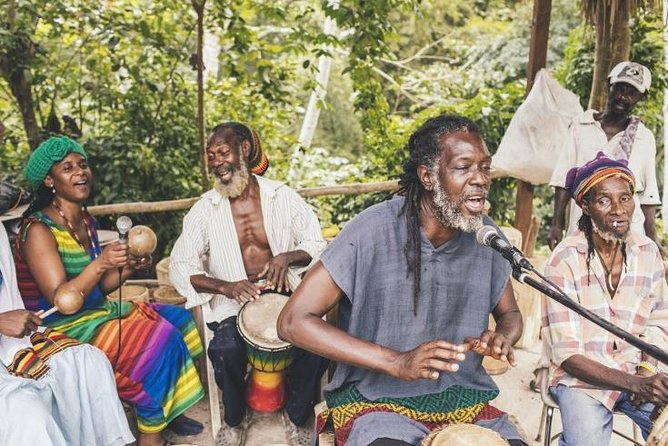
- About 30 minutes of Congo drumming and chanting, not a quick musical add-on
- Fresh fruit and fresh fruit juice samples during your visit
- Time to shop for souvenirs and facial products made at the village, with cash handy
Why This Rastafari Indigenous Village Tour Works So Well From Montego Bay
Montego Bay is all movement, beaches, and cruise schedules. This tour slows things down in a good way. You’re not just looking at culture through a lens, you’re learning how Rastafarianism connects to life and community in Jamaica, in a village setting.
What makes it especially practical is the flow. You start with transportation taken care of, then you arrive, meet friendly guides, and get a guided tour that includes both information and experiences you can feel, like the drumming and chanting. It’s the kind of structure that helps you absorb what you’re hearing, without sprinting from stop to stop.
You also get a sense of rhythm to the day. The drumming and chanting lasts about 30 minutes, which is long enough to take it in, but short enough that you can still ask questions and not lose your energy.
If your goal is cultural learning with a real human pace, this tour fits. If your goal is maximum sightseeing variety, it might feel more focused than you expect.
You can also read our reviews of more tours and experiences in Montego Bay.



Getting There: Comfort, Timing, and the Human Touch
The transport part matters more than people think. You’re picked up from your Montego Bay hotel or from the cruise port and taken in an air-conditioned vehicle. That means fewer uncomfortable transitions, especially in Jamaica’s heat.
A lot of the quality comes from how the driver sets expectations on the ride. One driver named Kevin is highlighted as friendly and accommodating, and in those situations you can pick up helpful history and context before you even arrive at the village. Even if you don’t get the same person, the idea holds: the ride can help you understand what you’re about to see.
Because this is a private experience for just you and your party, the schedule tends to flex around your group. That’s nice if you want time for questions, photos, or extra clarity. It also means punctuality matters, since the visit is built as a smooth block of time.
Crossing to the Village: What to Wear and Why It Matters
Reaching the village includes a short crossing over a small steam or stream. It’s not a big adventure, but it is a real one step that can make or break your comfort.
I strongly suggest water shoes or sandals made for getting wet. Wear something that grips well and dries quickly, because you’ll be hopping or walking across to get to the village. If you show up in shoes that stay wet, the rest of the tour becomes less enjoyable fast.
This is also why I like the tour’s setup: it tells you what you need up front. You can plan, and you can avoid the end-of-day frustration of sore feet or soggy footwear.
When you’re ready, you’ll meet the guides on arrival. That “arrive, meet, walk in” moment is usually where the vibe shifts from travel mode to learning mode.
The Guided Village Visit: Learning Rastafarianism Where It Lives
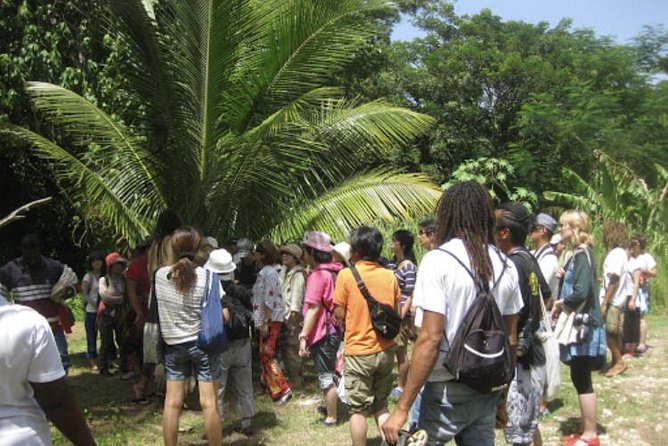
Once you’re at the village, the guides do the heavy lifting. The tour is built around learning Rastafarianism in Jamaica, with an abundance of information that you’re guided through on site.
The format matters. Instead of a lecture that never stops, you get guided explanation tied to what’s around you. You can ask questions in the flow, and the answers have context because they’re connected to village life.
You’ll also get a chance to refresh. Samples of fresh fruits and fresh fruit juices are available, which is a welcome break in the heat and a nice change from snack-on-the-go tourism. It also makes the visit feel less staged, more like you’re being received at a place that has daily routines.
At about an hour, the time at the village is long enough to learn, experience, and still keep your energy. It’s not so long that you feel trapped, but it gives you space to actually absorb what you’re being told.
Congo Drumming and Chanting: The 30-Minute Moment to Pay Attention To
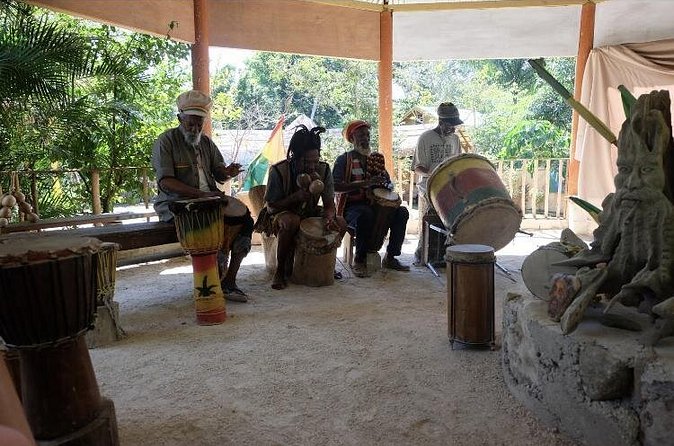
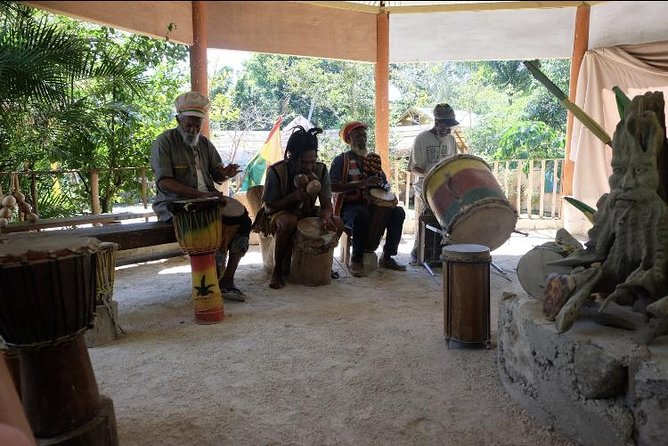
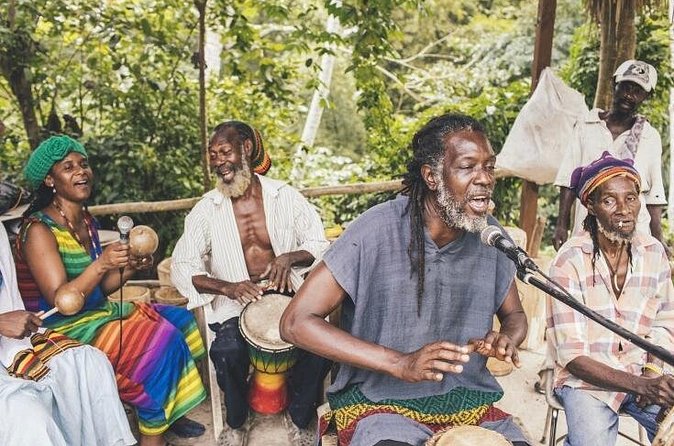
Then comes the part people remember: the drumming and chanting. You’ll be treated to about 30 minutes of real authentic Congo drumming and chanting.
This segment is worth treating like the main course, not background noise. If you’re the type who likes to document everything, slow down just a bit and be present. It’s easier to understand the meaning and energy when you’re not constantly switching between phone and face.
A good approach is to watch first, then ask. Listen for changes in rhythm, and pay attention to how the guides set the scene with context. If you want to take photos, do it when you feel the guide has finished explaining, so you don’t miss details.
This isn’t marketed as “watch and move on.” It’s built as a time to take in sound and spirit, and the tour pacing leaves room for that.

Souvenirs and Facial Products: Shopping Done With Cash and Context
At the end of the tour, you’ll be shown facial products and other souvenirs produced right in the village. This is one of the most practical parts of the experience, because it’s not just a shop stop tacked onto the end.
You’re seeing items tied directly to the community you just learned about. That makes purchases feel more intentional. It also helps you ask questions about what you’re buying, since you’ll likely be guided as you look.
Bring cash for shopping, and bring a camera if you want photos. Having cash ready avoids the awkward scramble at the exact time you decide you want something.
My advice: set a budget before you arrive, and browse with purpose. Take a photo of anything that catches your eye, then decide after you’ve seen a few options. This helps you avoid impulse buys made in the last five minutes.
Duration and Private Format: How Long You’re Really Out
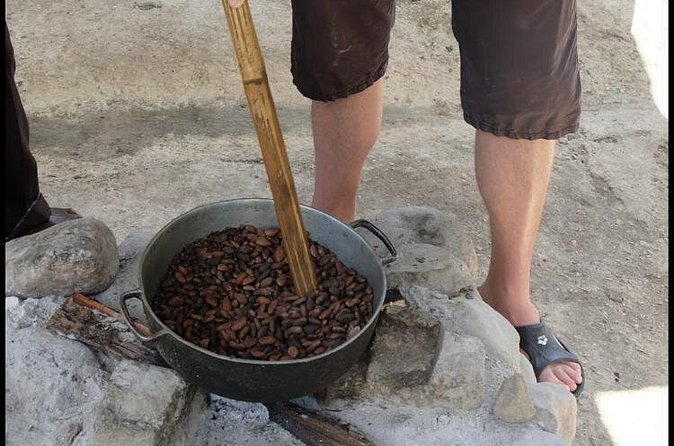
The tour runs about 2 to 4 hours. That range matters. You should expect it to stretch if your schedule timing is off, or if your guides spend extra time explaining details.
Because this is a private experience for your group only, you don’t have to worry about being rushed by a big crowd timeline. Private tours also tend to feel more personal, since you can ask questions without worrying about holding everyone up.
That said, the tour depends on good weather. If conditions aren’t ideal, you might be offered a different date or a full refund. Plan with the mindset that the experience is weather-sensitive, and you’ll feel less stressed.
Who it fits best:
- Couples who want culture plus a smooth, no-stress schedule
- Cruise passengers looking for a cultural block that feels structured
- Solo travelers who want a private guide dynamic
- Families who can handle a short stream crossing and want a guided learning experience
Price and Value: What $310 Per Person Is Paying For
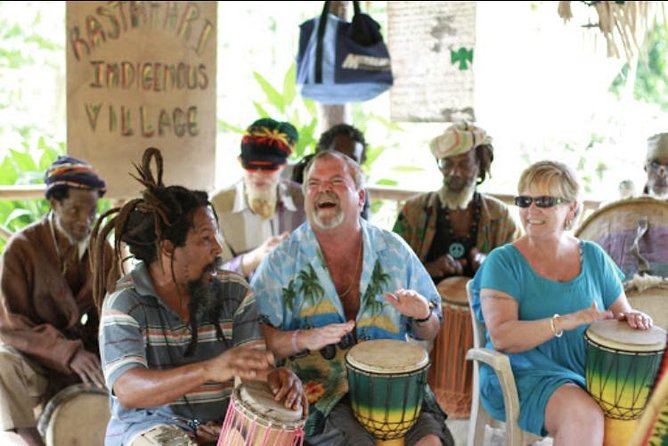
At $310 per person, this tour isn’t cheap. The value comes from what you get for that money: transportation, guided learning, a cultural performance segment, and included admission elements.
Here’s how I think about it:
- The air-conditioned vehicle and pickup from your hotel or cruise port reduce your time and discomfort.
- The experience is private for your group, which usually improves the quality of interaction.
- You’re not just watching, you’re guided through Rastafarianism context, you get fruit and fruit juice samples, and you hear about 30 minutes of Congo drumming and chanting.
- The tour includes admission ticket elements, so you’re not stacking additional fees on top in the moment.
If you’re traveling as a larger group, there’s even more upside. Group discounts are available if you have 6 more persons, and the operator suggests calling or texting or WhatsApp for group rates. That’s often how you make a higher-priced private tour feel more reasonable.
If you’re a solo traveler on a tight budget, you might compare it to lower-cost cultural visits. But if you care about comfort, depth of explanation, and the drumming moment, this price can feel justified.
Should You Book the Rastafari Indigenous Village Tour?
I’d book it if you want culture with a clear structure, not a vague “see something local” plan. The combination of guided Rastafarianism learning, about 30 minutes of Congo drumming and chanting, and a guided village setting creates a more meaningful experience than a typical quick stop.
You should think twice if:
- You do not want to deal with wet ground conditions at all, since you’ll cross a small steam or stream
- Your schedule is inflexible due to weather sensitivity
- You prefer big-city sightseeing, since this is focused and experience-heavy
If you’re deciding between options, my tiebreakers are simple: bring water shoes, bring cash, and go in with curiosity. This kind of tour rewards respectful attention and a willingness to slow down for a guided explanation.
FAQ
How long is the Rastafari Indigenous Village Tour?
The tour lasts about 2 to 4 hours.
Is pickup included from Montego Bay hotels and the cruise port?
Yes. Pickup is offered, and transfers from your Montego Bay hotel or the cruise port are included.
Do I need water shoes or sandals?
Yes. You need to hop or walk across a small steam or river to reach the village, so bring water shoes or sandals that dry quickly.
What is included once you arrive at the village?
You’ll take a guided tour, hear about 30 minutes of Congo drumming and chanting, and you’ll have fresh fruit and fresh fruit juice samples available.
Is this tour private?
Yes. It’s a private experience for just your group.
Is there a group discount?
Yes. Group discounts are available if you have 6 or more persons, and the provider asks you to call, text, or use WhatsApp for a group rate.
What if the weather is poor?
This experience requires good weather. If it’s canceled due to poor weather, you’ll be offered a different date or a full refund.
More Tours in Montego Bay


More Tour Reviews in Montego Bay
Not for you? Here's more nearby things to do in Montego Bay we have reviewed






Tours, compared.
 ★ 5.0Private Authentic Down-to-Earth Half Day Tour in Montego BayFrom $55500 reviews
 ★ 5.0Blue Hole and Dunn’s River Falls Private Tour from Montego BayFrom $115420 reviews
 ★ 4.0Luminous Lagoon Night Tour from Montego BayFrom $54419 reviews
 ★ 4.5Bob Marley’s Nine Mile Admission and Guided Tour from Montego BayFrom $135350 reviews
 ★ 5.0Explore Montego Bay Private Highlight Tour from Montego BayFrom $70311 reviews
 ★ 5.0Margaritaville Hip-Strip and Great River Rafting Private TourFrom $30245 reviews
 ★ 5.0Montego Bay Private and Customized Highlights Day TourFrom $62219 reviews
 ★ 4.5Rose Hall Great House Haunted Night Tour with AdmissionFrom $35182 reviews