

Review · DRINKING TOURS
Make your own Bean to Bar Chocolate Factory Tour
Chocolate starts as a fruit, not a bar. This bean-to-bar chocolate factory tour in Falmouth turns cocoa pods into chocolate in real steps you can actually repeat, and I love that it is not just watching, it is doing. I also like the Taino to present-day story, told by Nick with help from Marta, plus the way his career path from BBC correspondent to chocolate maker adds extra context.
At $75 for about 1 hour 30 minutes, it is not a throwaway stop. The best fit is if you enjoy hands-on work and want history tied directly to what you are tasting and making.
Key highlights you should know before you go
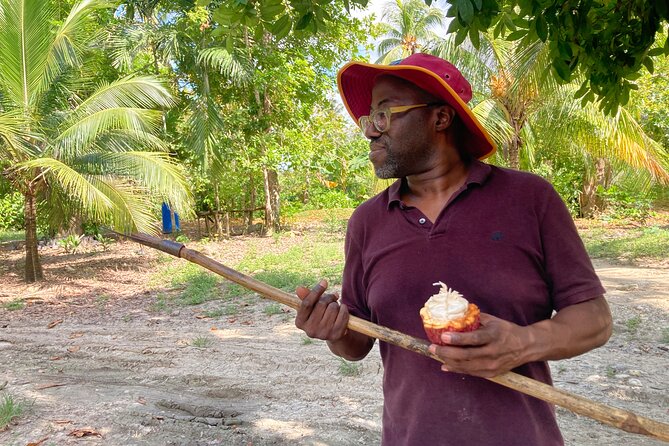
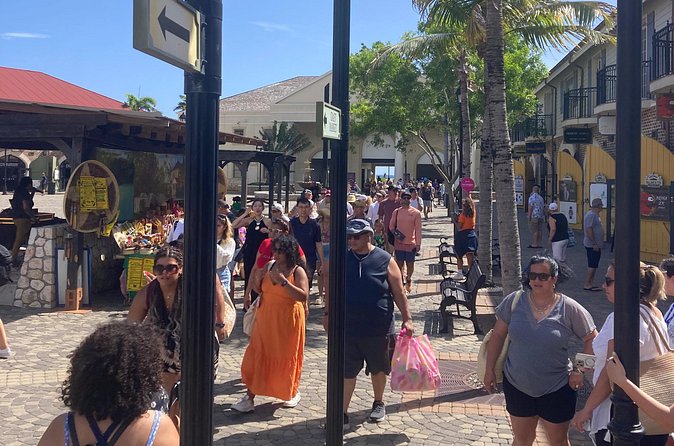
- Cruise-ship port access in Falmouth: you visit a part of the historic port area that is normally limited to cruise passengers
- Small group size (max 12): easier for questions, and you actually get time at the chocolate steps
- Pods up close: you look inside the fruit and learn how the beans are fermented and processed
- Spiced Jamaican chocolate, with a twist: you make a traditional flavor profile, then add your own modern touch
- A tempering hack using a hair dryer: you practice a practical method you can copy at home
Falmouth port location: more than a factory, it is a setting
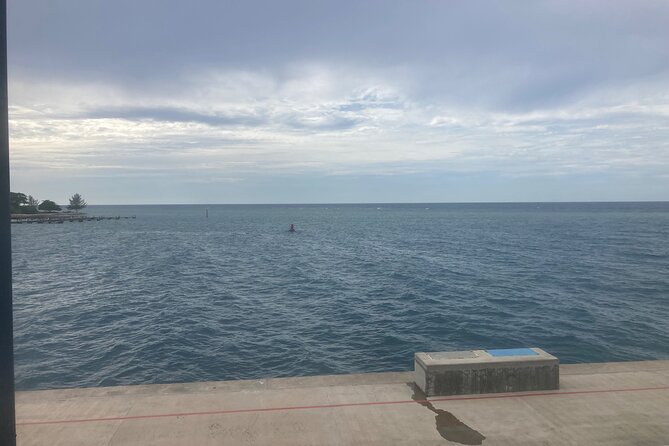
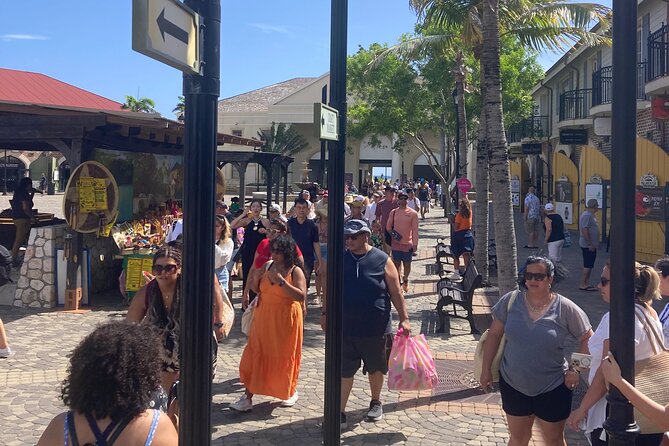
The tour runs in Falmouth, Jamaica, right on the edge of the Caribbean Sea, in the Historic Port of Falmouth. That matters because this is not tucked away in an industrial back street. It is a walkable, scenic area, with the kind of built-in context that makes cacao feel tied to place, not just to candy.
You start at 23 Harbour Ln, and you finish back at the meeting point. Starting at 9:00 am helps too. Morning light is better for photos, and you dodge the worst of the heat that can build up later in the day. The venue is also described as near public transportation, which is useful if you are not renting a car.
One more practical point: the tour runs on a mobile ticket, so make sure your phone is charged and you can access your confirmation. With a small max group size of 12, the schedule stays tight, so being on time actually improves your experience.
You can also read our reviews of more drinking tours in Trelawny

Nick and Marta: the cacao story goes far past chocolate bars
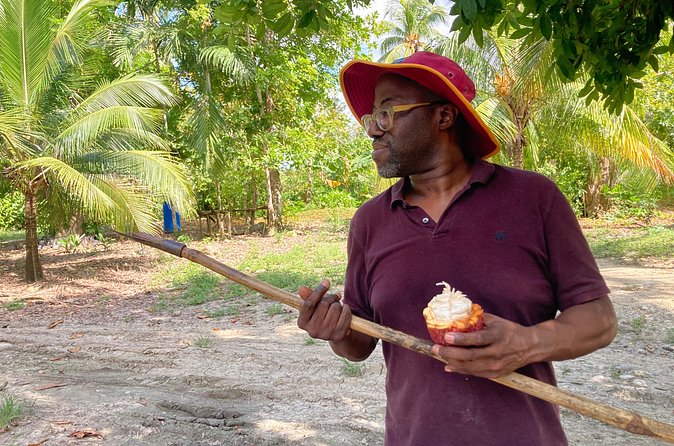
This tour is led by Nick, and Marta is part of the experience as well. I like that the tone feels personal and grounded. The description gives a clear promise: Nick shares how his family came from this area and how they have been growing cocoa for generations, and he adds a broader explanation of how chocolate has been used historically in the island.
You also get a career story. Nick explains how he went from a BBC correspondent to a chocolate maker, and that kind of before-and-after perspective helps explain why the tour is built the way it is. It is not only technique. It is storytelling that connects people, labor, and ingredients.
From what you will do, you can feel the structure: you learn the island’s cacao story, then you move into the physical work of making chocolate. That pairing is where it gets valuable for most people. History stays memorable because you are holding a bowl, working with chocolate, and seeing how raw ingredients become a finished product.
The tour also includes a short “get to know each other” moment. In a group capped at 12, that small step matters. You are more likely to feel comfortable asking questions while you are working, especially if you are nervous about tempering or handling pods.
Cocoa pods, fermentation, and roasting: the steps you can picture later
One of the best parts is that you get to see the cacao pods up close. The experience is built around showing the fruit and explaining what is inside. You will look into the fruit and learn how the beans are fermented on the farm. Then you will hear how the nibs are processed before your custom bars are revealed.
If you usually think of chocolate as something that begins in a factory, this part changes your mental map. Cacao is agricultural and messy at the start. Fermentation is the step that builds flavor, and the tour frames that as a farm process, not a mysterious factory trick. Even if you already know the basics, seeing the “from the pod” approach makes it easier to understand why different batches can taste different.
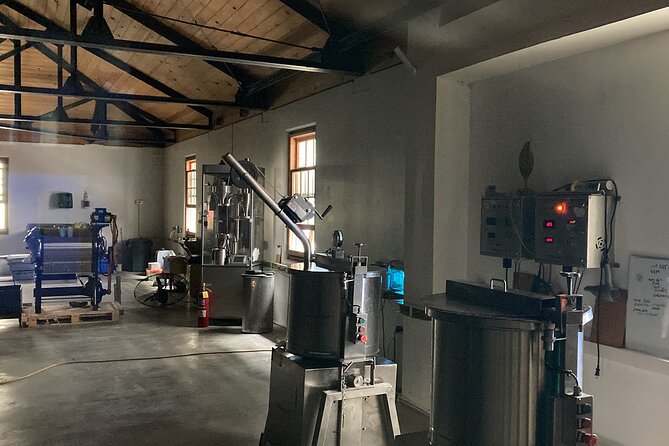
Then comes roasting. You roast cocoa in big industrial machines. That detail is practical, because it shows you that key flavor changes are happening before chocolate tempering ever enters the picture. In other words, tempering gets attention, but roasting and processing are not optional background steps. They are the foundation.
What I like about this setup is that you get a clear chain of events. Pods to beans to nibs, then roasting, then chocolate work. When you make your own bar later in the session, the taste has a reason behind it, not just a label.
Spiced Jamaican chocolate and the tempering hack with a hair dryer
You make traditional Jamaican spiced chocolate, but with a twist. The “spiced” part gives you a clear local flavor anchor, and the twist is what keeps it from being purely ceremonial. You will be actively involved in the process, not just tasting at a distance.
Then you learn a technique that can sound intimidating at home: hand tempering chocolate. Here is the key practical detail: you learn how to temper at any kitchen table using just a bowl, a spatula, and a hair dryer. That is exactly the kind of method that makes a chocolate class usable after you get home.
Why tempering matters for real life: tempered chocolate sets with a nicer snap and a more even finish. If you have ever melted chocolate and watched it turn dull or crumbly, you know how frustrating that can be. The tour’s value is that it translates a fussy technique into an everyday workflow. You are shown how to keep the chocolate in the tempering zone by using controlled warming, in a way that fits normal kitchen gear.
Keep expectations grounded: you are learning and practicing within an approximately 1 hour 30 minute format. That means you should pay attention, follow along closely, and do not treat it like you can coast. But it also means you leave with something you can try immediately rather than a vague lecture.
Also, the tour makes a point of explaining how the chocolate transforms from raw ingredients into finished yummy product. The tempering segment is the moment where that transformation becomes visible to you, not just described.
Your custom inclusion bar: how to think about add-ins
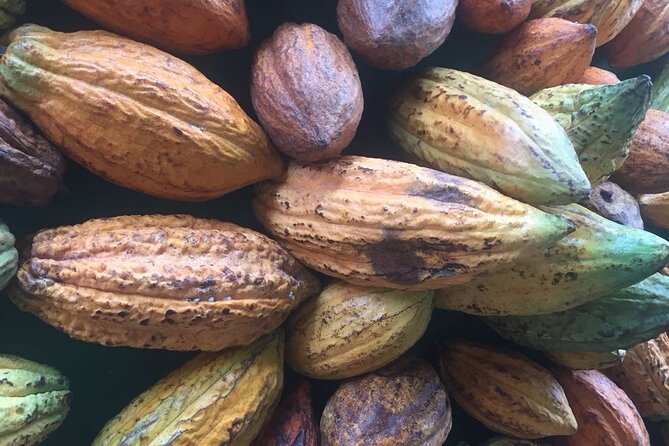
After the roasting and tempering work, you create your own custom made inclusion chocolate bars. You also get to walk through how the pods and fermentation connect to the final chocolate before your bespoke bars are unveiled.
The “inclusion” part is where many chocolate experiences stop at tasting. Here, you build. That makes you responsible for your flavor choices. If you have strong preferences, this is one of the reasons it feels fun instead of educational-only.
One practical benefit: inclusion selection is also a texture lesson. Cocoa is one texture. Add-ins change crunch, sweetness, and how the bar feels when it snaps. Because the tour is teaching the bean-to-bar journey, your mind links texture back to processing and roasting. That is how you stop treating chocolate as a random treat and start treating it like a crafted food.
The tour is also described as all vegan. Dark chocolate is vegan, and the tour explicitly notes that it will taste like Christmas, while milk chocolate fans may find it a revelation. I read that as a signal that you should come open-minded if you usually go straight for milk. The point is not to replace milk flavors exactly, but to help you recognize that vegan dark can carry satisfying richness and holiday spice vibes.






Price and value: why $75 can be fair here
At $75 per person for about 1 hour 30 minutes, the ticket is not cheap, but it is also not just for a quick sampling. The value comes from the hands-on structure: you learn the story of cacao and chocolate making, you roast cocoa, you practice hand tempering, and you create custom inclusion bars within the same session.
You also get the advantage of a small group, with a maximum of 12 travelers. Small groups mean more time at the table, and it typically means fewer people standing around while someone else does the work. If you like classes that feel interactive, this is the kind of class where you can actually participate.
One more planning reality: this experience is booked on average 64 days in advance. That does not mean you can never get a spot late, but it is a sign that popular dates may fill up. If you are serious about fitting it into your schedule in Falmouth, booking ahead is smart.
Transportation-wise, the tour is near public transportation. That helps keep costs reasonable if you are staying nearby or using local options instead of only taxis.
Who should book, and who might skip it
Book this tour if you are a chocolate person who also likes learning how food gets made. The hands-on tempering hack, using a hair dryer plus basic kitchen tools, is especially good for anyone who has tried making chocolate at home and wants a method that does not require fancy equipment.
It is also a strong choice for people who care about how local agriculture connects to the final product. The tour is built on cacao grown for generations in the area, with an island-wide story that includes indigenous Taino roots and how chocolate shows up today.
You might consider skipping if you are looking for a purely passive tasting where someone else does all the work. This experience is hands-on by design. At 90 minutes, you will want to pay attention and move with the group.
Should you book this cocoa-to-bar tour in Falmouth?
Yes, if you want a bean-to-bar experience that is practical, local, and tied to real technique. The combination of pods up close, fermentation and processing explanations, roasting, and hand tempering with a hair dryer makes it more useful than most chocolate tours that stop at tasting.
If you are on the fence because you are used to milk chocolate, I would still give it a shot. The tour directly signals that vegan dark can deliver holiday-style flavors, and it is designed to change your idea of what vegan chocolate can taste like.
If you want a class that you can build on at home, this one gives you the starting point, not just the story.
FAQ
Where is the tour meeting point?
The tour starts at 23 Harbour Ln, Falmouth, Jamaica, and it ends back at the same meeting point.
How long does the tour last?
It runs for about 1 hour 30 minutes.
How much does the tour cost?
The price is $75.00 per person.
Is the chocolate vegan?
Yes, the tour is described as all vegan, and it notes that dark chocolate is vegan.
How many people are in the group?
The tour has a maximum of 12 travelers.
Can I cancel and get a full refund?
Yes. You can cancel up to 24 hours in advance for a full refund, and the cut-off is based on local time.
More Drinking Tours in Trelawny
More Tours in Trelawny

More Tour Reviews in Trelawny


Not for you? Here's more nearby things to do in Trelawny we have reviewed






Drinking Tours, compared.
 ★ 4.0Reggae Catamaran and Snorkeling Open Bar Cruise Montego BayFrom $125453 reviews
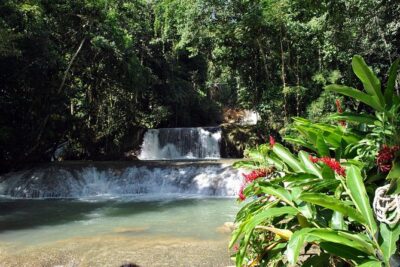 ★ 5.0YS Falls, Black River Safari, Appleton Rum Tour OR Pelican Bar (Choose Up to 3)From $19590 reviews
 ★ 3.8Reggae Catamaran 18+ Cruise with Open BarFrom $12587 reviews
 ★ 5.0Montego Bay Private Yacht Tour with Open Bar and LunchFrom $2,50067 reviews
 ★ 5.0Private Transportation from Montego Bay to Appleton Estate & Pelican BarFrom $13659 reviews
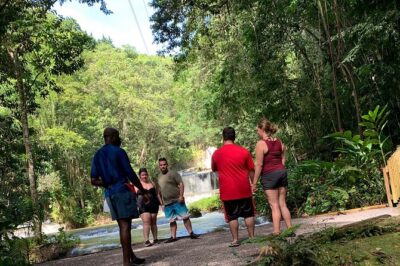 ★ 5.0Appleton estate,YS Falls,Black River Safari,Pelican Bar(any 3of4)From $18023 reviews
 ★ 5.0YS Falls, Black River Safari, and Floyd’s Pelican Bar Day-Trip (Transportation)From $13318 reviews
 ★ 4.5Appleton Estate Rum Tour and Pelican Bar Customize TourFrom $12014 reviews
Browse the lists this tour appears in